

The difference between interior design and interior architecture
Many people think interior design services and interior architecture services are the same. Not really. Though there are many similarities between the two services and many in the design industry often use the words interchangeably, there are some differences between interior design and interior architecture and the services they both provide.
However, both interior design services and interior architecture services are closely related, are part of the same industry, and are within the same niche.
Interior Architecture
Interior architecture is a practice that incorporates the art of design and the science of architecture, and it focuses on the technical aspects of planning and building a room. This field involves making the room safe and functional as well as designing aesthetically-appealing lighting, color and texture for a space. Professionals who practice interior architecture typically focus on a combination of structural elements, building materials and artistic components.
Interior Architects Responsibilities
Interior architects often manage complex sets of tasks to address when planning a room. Their projects typically begin with meeting with clients to determine their requirements and preferences for spaces. Some interior architects specialize in designing new spaces, while others focus on refurbishing existing spaces. Those who focus on the latter analyze the existing interior structure of the space to assess any limitations or requirements. Those who specialize in designing new spaces may work with other architects to ensure that their plans for the interior space work seamlessly with plans for the rest of the structure.
As they develop interior plans, these architects assess the environment around the space, study the natural light and assess the feasibility of potential plans. Many interior architects then sketch their preliminary ideas manually before using computer-aided design (CAD) and drafting and building information modeling (BIM) applications to create scaled plans for the interior space. These plans often reflect aesthetic aspects of the design along with structural elements like electrical, plumbing, heating, ventilation and air-conditioning systems.
Interior architects are also responsible for creating project plans that include cost estimates and proposed timelines. Most seek out contractors to carry out their projects, which may involve drafting agreements and hiring temporary team members. Interior architects also frequently collaborate with other architects as well as interior designers, engineers and construction teams, especially when working on complex projects.
Because their projects involve safety and sustainability, architects must understand and abide by building codes and government regulations that apply to the interior space. They often research and test building materials and construction methods to confirm that they adhere to required codes and regulations.
Once projects commence, interior architects often visit the construction site to oversee progress. They may supervise contractors, manage scheduling and ensure that the construction team uses the appropriate building materials and methods. Interior architects also assist with material tests required by local agencies or codes.
Interior Design
Interior design is a field that focuses more on art than functionality and incorporates aesthetic elements such as furniture, flooring, walls, window coverings and artwork. It also involves color schemes, textiles, lighting, design materials and sustainability. Interior design applies to a wide variety of spaces, ranging from residential and corporate to public and industrial.
Interior Designer Responsibilities
Interior designers are responsible for making rooms and indoor spaces comfortable, functional and aesthetically pleasing. Most interior designers begin projects by assessing clients’ needs and objectives, which typically include how they intend to use the room and the ways people will move through the space.
After meeting with clients, interior designers research materials and sketch ideas for plans. Many interior designers also use CAD and BIM programs to create two- and three-dimensional plans. These digital plans usually feature room layouts, electrical and plumbing systems, materials for walls and flooring and specifications for lighting and furniture. In most cases, plans also include building permits needed to carry out the design.
Interior designers then estimate costs and timelines, order materials, apply for essential permits and seek out contractors to complete the work. Most interior designers manage small teams of contractors, and they also work closely with architects, engineers and tradespeople. They typically oversee all construction and installation related to their plans, and they may perform some of the design and installation work themselves.
While some interior designers are generalists, many choose areas of specialization. Some may focus on certain styles, particular rooms, such as kitchens and bathrooms, or types of structures, such as residential or corporate spaces.
                                                                                                                                 Source: Google
An optical fiber or optical fiber is an adaptable, straightforward fiber made by drawing glass (silica) or plastic to a width marginally thicker than that of human hair. Optical strands are utilized most frequently as a way to send light[a] between the two finishes of the fiber and track down wide use in fiber-optic correspondences, where they grant transmission over longer distances and at higher transfer speeds (information move rates) than electrical links. Filaments are utilized rather than metal wires since signals travel along them with less misfortune; likewise, strands are safe from the electromagnetic impedance. Optical fibers normally incorporate a center encompassed by a straightforward cladding material with a lower record of refraction. Light is kept in the center by the peculiarity of complete inward reflection which makes the fiber go about as a waveguide. Fibers that help numerous engendering ways or cross-over modes are called multi mode filaments, while those that help a solitary mode are called single-mode strands (SMF). Multi
mode filaments by and large have a more extensive center width and are utilized for brief distance correspondence joins and for applications where high power should be communicated.
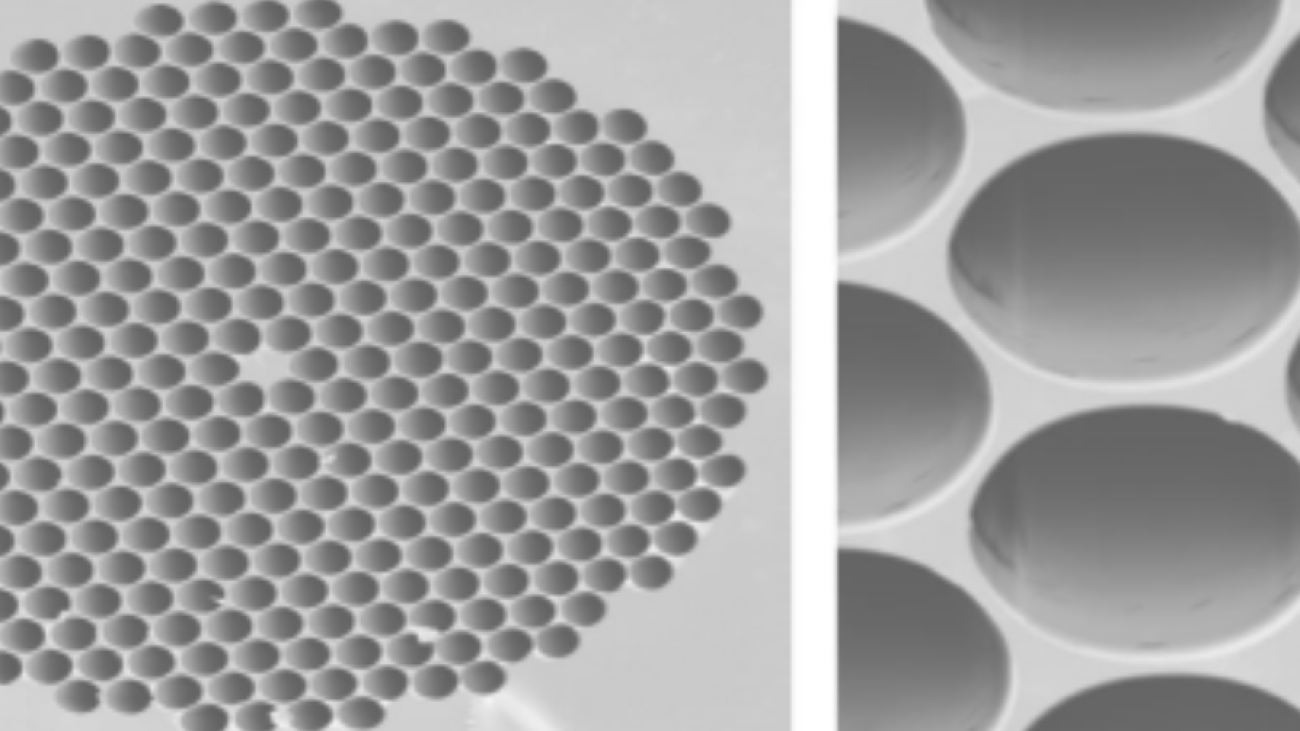
Photonic crystal fibres have wavelength-scale morphological microstructure running down their length. This structure enables light to be controlled within the fibre in ways not previously possible or even imaginable. Our understanding of what an optical fibre is and what it does is changing because of the development of this new technology, and a broad range of applications based on these principles is being developed
The field of applied science and designing worried about the plan and use of optical strands is known as fiber optics. Photonic-crystal fiber (PCF) is a class of optical fiber in view of the properties of photonic precious stones. It was first investigated in 1996 in the UK on the grounds that its capacity to keep light in empty centers or with constrained qualities is unimaginable in customary optical fiber. More explicit classes of PCF incorporate photonic-bandgap fiber (PCFs that bind light by band hole impacts), holey fiber (PCFs utilizing air openings in their cross
segments), opening helped fiber (PCFs directing light by a traditional higher-record center changed by the presence of air openings), and Bragg fiber (photonic-bandgap fiber framed by concentric rings of the multi-facet movie). Photonic crystal fibers might be viewed as a subgroup of a more broad class of micro structured optical filaments, where primary changes guide light, not just by refractive index contrasts. Photonic bandgap fibers are optical strands where a photonic bandgap impact as opposed to a fiber center locale with an expanded refractive record is used for directing light. Such a directing system ordinarily works just in a restricted wavelength region.
As a rule, standard organized strands, for example, photonic crystal fiber, have a cross-segment (typically uniform along the fiber length) micro-structured from one, two, or more materials, generally regularly organized occasionally over a significant part of the cross-segment, normally as a “cladding” surrounding a center (or a few centers) where light is bound. Most photonic crystal fibers have been manufactured in silica glass, yet different glasses have additionally been utilized to get specific optical properties (like high optical non-linearity). One very exciting feature of the PCF technology is the possibility of realizing fibers that guide light in a hollow (air) core, using the Photonic Bandgap (PBG) effect. The highly periodic structure of air holes in the cladding of the fiber creates a photonic bandgap. This means that light of frequencies within the PBG is
not allowed to propagate out through the cladding and may be trapped in the core of the fiber. In contrast to index-guiding fibers, there is no requirement on the refractive index of the core region to be larger than the index of the cladding.
The scattering qualities of PCFs can be controlled to make filaments having zero, low, or irregular scattering at noticeable frequencies. The scattering can likewise be straightened. Consolidating these highlights with little mode field regions brings about remarkable nonlinear strands. By changing the example of air openings or the materials utilized, it is feasible to control different attributes of PCFs, for example, the single-mode cut-off frequency, and the nonlinear coefficient. The plan adaptability is exceptionally huge, and originators can utilize a wide range of, captivating, and odd air opening examples to accomplish explicit PCF boundaries. Expanding the air-filling portion in the cladding regularly prompts multimode conduct. A circular center can make an exceptionally birefringent fiber that is polarization-keeping up with.
Fig: Structure of Photonic crystal fiber
Photonic crystal fibers are for the most part isolated into two fundamental classifications: Index Guiding Fibers that have a strong center, and Photonic Bandgap Fibers that have occasional micro structured components and a center of low-record material. The uses of photonic crystal fibers incorporate lasers, enhancers, scattering compensators, and nonlinear handling. Photonic gem fiber structures are presently created in numerous research facilities overall utilizing a wide range of methods. Applications of PCFs are found in a wide range of research fields like spectroscopy, metrology, biomedicine, imaging, telecommunication, industrial machining, and military.
Photonic crystal fibers can be partitioned into two methods of activity, as indicated by their instrument for repression. Those with a strong center, or a center with a higher typical record than the micro-structured cladding, can work on a similar file core value as traditional optical fiber â be that as it may, they can have a lot higher compelling refractive record contrast among center and cladding, and thusly can have a lot more grounded confinement for applications in nonlinear optical gadgets, polarization-keeping up with filaments, (or they can likewise be made with much
lower powerful file contrast). On the other hand, one can make a “photonic bandgap” fiber, in which the light is restricted by a photonic bandgap made by the micro-structured cladding – such a bandgap, appropriately planned, can limit light in a lower-file center, and, surprisingly, an empty (air) center. Bandgap strands with empty centers might possibly dodge limits forced by accessible materials, for instance, to make filaments that guide light in frequencies for which straightforward materials are not accessible (on the grounds that the light is basically in the air, not in the strong materials). One more possible benefit of an empty center is that one can powerfully bring materials into the center, for example, a gas that will be dissected for the presence of some substance. PCF can likewise be adjusted by covering the openings with sol-gels of comparable or different record material to improve its transmittance of light.
Since the core has a higher file of refraction than the cladding, the light will be deeply restricted in the event that the precise condition for complete inner reflectance is met. The fiber geometry and piece decide the discrete arrangement of electromagnetic fields, or fiber modes, which can engender in the fiber.
There are two expansive characterizations of modes, radiation modes, and directed modes. Radiation modes do the energy of the center; the energy is immediately dispersed. Directed modes are profoundly bound, and spread energy along the fiber, shipping data, and power. On the off chance that the fiber center is sufficiently enormous, it can uphold numerous concurrent directed modes.
The transmission capacity of an optical fiber decides the information rate. The system that restricts a fiber’s data transmission is known as scattering. Scattering is the spreading of the optical heartbeats as they travel down the fiber. The file of refraction changes relying upon frequency. In this manner, various frequencies will go down an optical fiber at various speeds. This is known as Chromatic Dispersion. Light power engendering in a fiber rots dramatically with length because of retention and dispersing misfortunes. Lessening is the absolute most significant component in deciding the expense of fiber optic telecom frameworks, as the need might have arisen to keep up with OK sign levels.The Numerical Aperture (NA) of a fiber is defined as the sine of the largest angle an incident ray can have for total internal reflectance in the core. Rays launched outside the angle specified by a fiber’s NA will excite radiation modes of the fiber.
As a result, PCFs have become an attractive and endless research field including biomedical Engineering, tomography, imaging such as tomography, and other promising applications in different sectors. Therefore this talk first discusses the basic principle of PCFs and then focuses on the expected roles of PCF in the future fiber industry.
āĻŦāĻŋāĻā§āĻāĻžāύ⧠āĻĨāĻŽāĻžāϏ āĻāĻĄāĻŋāϏāύā§āϰ āĻļā§āώ āύāĻŋāĻāĻļā§āĻŦāĻžāϏ āĻāĻāĻāĻŋ āĻŦā§āϤāϞ⧠āĻāϰāĻž (Scientist Thomas Edison’s last breath is in a bottle)
Wireless Communication is the quickest developing and most lively mechanical region in the correspondence field. Remote Correspondence is a strategy for sending data from one highlight to another, without utilizing any association like wires, links, or any medium. We live in a Universe of correspondence and Remote Correspondence, specifically, is a vital piece of our lives. A portion of the regularly involved Remote Correspondence Frameworks in our day-to-day life are Cell Phones, GPS Beneficiaries, Controllers, Bluetooth Sound, and Wi-Fi, and so on. Wireless networks are less expensive to introduce and keep up with. Information is communicated quicker and at a high velocity. Diminished upkeep and establishment costs contrasted with one more type of organization. Remote organizations can be gotten to from any place, whenever.
Main Application of wireless communication systems are Satellite system, Television remote control, Wi-Fi, Paging system, Wi-Max, Security systems, Cellphones, Computer interface devices, Bluetooth, GPS, GSM. The interconnection of frameworks, individuals, or things with the assistance of correspondence media can be alluded to as an organization. The sort of correspondence that utilizes electromagnetic waves as correspondence media for sending and getting information or voice is called remote correspondence. The electromagnetic range is separated into a distinct channel for information transmission. Some most attractive advantages are mentioned here:
1.Freedom from wires: Can be configured with any physical connection.
2.Easy to setup: Wireless network is easy to expand and setup
3.Better or global coverage: It provides global reach by providing networking in places such as rural areas, battlefields, etcâĻ where wiring is not feasible.
4.Flexibility: Wireless network is more flexible and adaptable compared to a wired network.
5.Cost-effectiveness: The wireless network is relatively cheaper since it is easy to install and doesnât require cables.
6.Mobile and portable: Wireless network is easy to carry and re-install in another place. 7.Mobility -: It has good mobility of usage.
Every system has some advantages and disadvantages. Wireless system also has disadvantages 1.As communication is done through open space, it is less secure.
2.Unreliability
3.More open to interference.
4.Increased chance of jamming.
5.Transmission speed is comparably less.
7.it has a limited amount of bandwidth for communication and breaches of network security. 8.Wireless networks can be easily hacked.
9.Wireless networks require a careful radio frequency when they are installed.
10.Wireless networks are usually inexpensive, but the cost of installation is very high, and setting up a wireless network is very costly.
Technical Challenges Faced In Network. Most Notably. They Are As Follows: multipath propagation
spectrum limitations;
energy limitations;
user mobility;
noise limited systems;
interference limited systems.
The developing interest for incredibly high-information rate administrations, along with arising progressed Web of Things (IoT) and Industry 4.0 applications carry new specialized difficulties to remote correspondences. New help classes, for example, ultra-HD video and multisensory augmented reality, push for significantly higher unearthly proficiency, and the investigation of outrageous recurrence groups. Remote correspondence frameworks are conveying a developing measure of private data. The telecom idea of remote transmissions, notwithstanding, makes the sent data powerless against snooping. To actually uphold different profoundly mysterious delicate applications, novel transmission advancements ought to apply to work with or even improve data mystery. For instance, the secure execution of remote transmission could be improved by investigating remote engendering attributes, as in actual layer security technology. The challenge is the manner by which to maximally profit from such investigation while regarding the protection of genuine clients. Inventive transmission answers for mystery and protection improvement are of incredible proceeding with interest to the remote local area.
The range appropriate for remote interchanges is turning out to be progressively scant, which persuades the investigation of new range groups, including millimeter-wave and tera-Hertz (THz). While getting a charge out of bigger data transfer capacity, the inclusion region over these higher RF groups is by and large a lot more modest because of their higher proliferation misfortune. The most famous relief arrangement is to apply directional beamforming transmission innovation. One more answer for address range shortage is to work on the use of the current range through mental radio transmission. Optional access to under-used radio range can oblige IoT applications with a less severe nature of administration prerequisites. In the meantime, the achievement
sending of optional framework depends upon proficient range detecting and channel assessment calculations for asset compelled IoT gadgets.
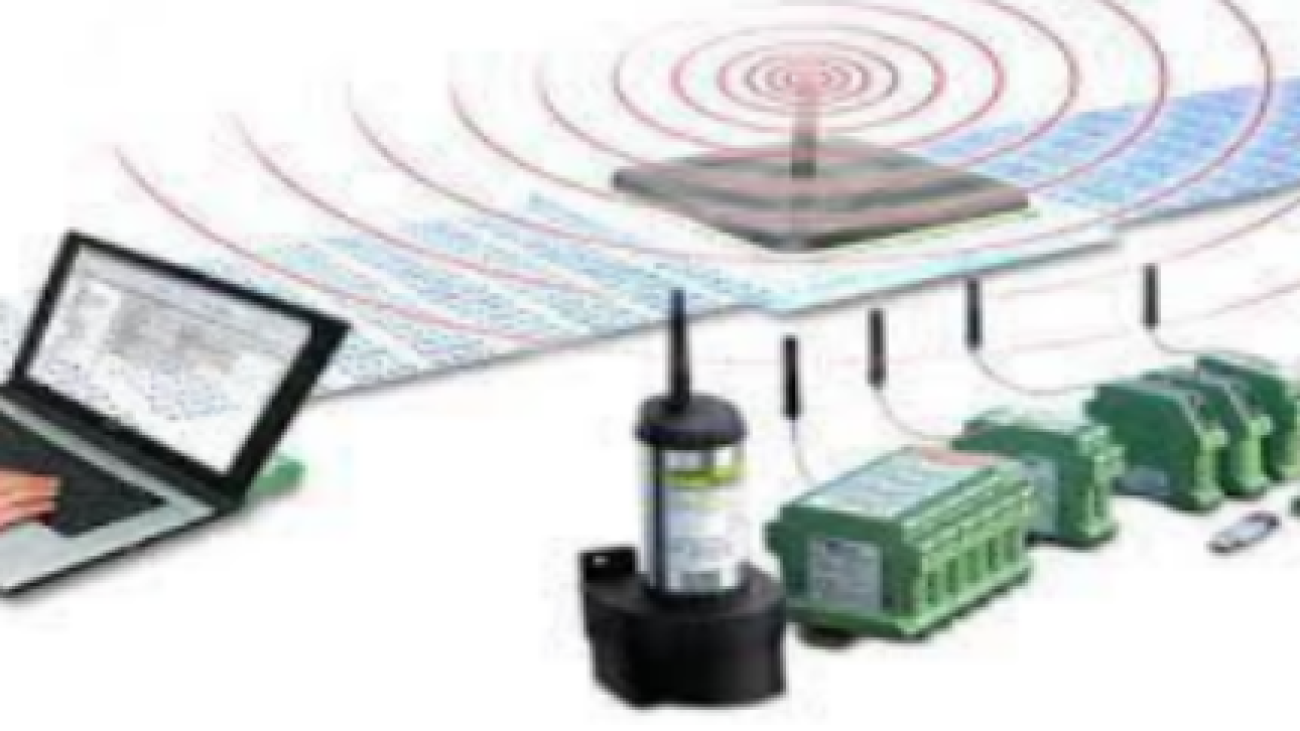
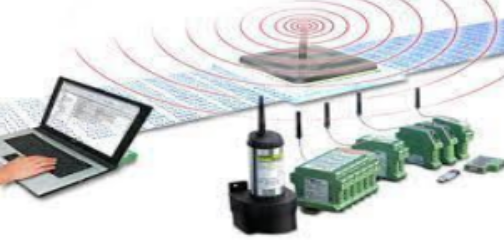
Figure: Wireless systemÂ
Another direction to accommodate the growing demand for wireless services is to improve system resource utilization with a novel system structure. A large-scale collaborative cell-free network structure can overcome the limitations of static resource allocation of traditional cellular systems. The test is the means by which to understand the potential exhibition gains with adequate framework intricacy and execution cost, related to continuous channel assessment, synchronization in time and recurrence areas, and joint handling at completely associated base stations.
Compelling remote access methods are crucial for people in the future of remote correspondence frameworks to in a general sense meet the rigid necessities, which incorporate extremely high phantom effectiveness, exceptionally low idleness, enormous gadget network, extremely high reachable information rate, ultrahigh dependability, fantastic client decency, high throughput, backing to different nature of-administration (QoS), energy proficiency, and a sensational decrease in the expense. Future remote organizations are imagined to have powerful geography in nature in light of organization densification, wherein clients will have numerous associations so client affiliation choices will turn into a precarious part. Describing the climate elements to guarantee that the framework makes the most of this new geography will be urgent in the up-and-coming age of remote organizations
New coding and adjustment plans are significant in future remote organizations to guarantee that the reachable additions anticipated by the hypothesis can be acknowledged by and by. In particular, high-level channel coding and regulation plans along with space-air-ground submerged coordinated organizations can serve to genuinely satisfy the enormous network all over the place and like clockwork. Besides, to give a lot higher unearthly effectiveness in future remote organizations, a decent technique is to embrace better balance and channel coding plans or new regulation assets.
To help different arising applications, new assets and impedance the board plans are normal in future remote organizations. From this point of view, AI-based methods have drawn colossal interest because of their capacity to further develop framework execution and lessen the computational expense.
Numerous specialized difficulties are to be addressed to fulfilling severe and clashing prerequisites for future remote frameworks, including exceptionally high ghostly proficiency, extremely low idleness, enormous gadget network, extremely high feasible information rate, super high dependability, magnificent client decency, high throughput, different nature of
administration, energy productivity, and an emotional expense decrease. The field of remote correspondences will observe many energizing mechanical leaps forwards soon.